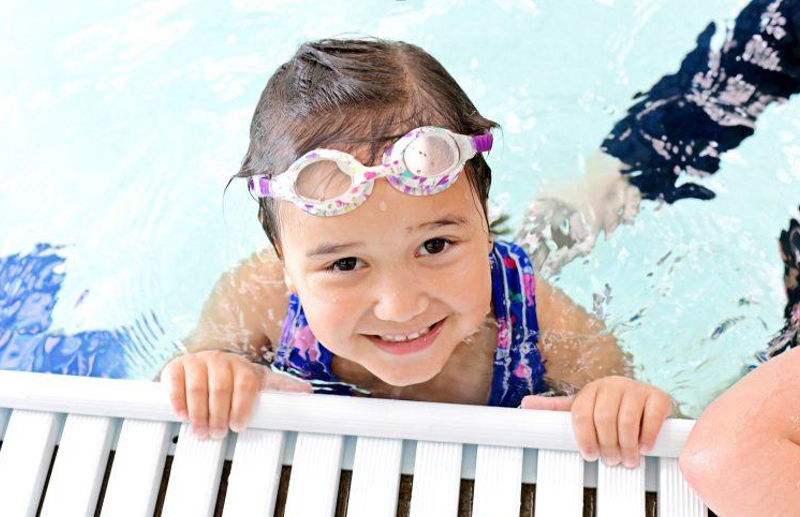
Somewhere between the pediatrician’s office and the group chat with other parents, a handful of bad ideas about baby swimming became conventional wisdom. Most of them sound reasonable enough that parents repeat them without ever checking if they’re true. If you’ve hesitated on swimming lessons for babies because of something you heard secondhand, there’s a decent chance it’s not actually accurate, and it might be costing your child months of comfort in the water they could’ve had already.
Some of these myths are outdated advice that used to make more sense decades ago. Others were never really true and just spread because they sound cautious, which people tend to trust by default. Either way, a lot of parents end up waiting longer than necessary, based on information that doesn’t hold up.
Myth: Babies Need to Wait Until They’re a Year Old
This one is probably the most common, and it’s mostly outdated. There used to be more caution around infant water exposure due to concerns about ear infections and water intoxication, but current guidance from most pediatric and swim safety organizations supports starting much earlier, often as young as a few months old, with proper supervision and appropriately structured lessons.
Waiting until twelve months isn’t dangerous, but it’s not necessary either. Babies who start earlier often build water comfort faster, simply because they haven’t yet developed the same wariness of new sensations that older babies and toddlers sometimes show. A six-month-old and a fourteen-month-old approach a first swim lesson very differently, and starting earlier isn’t the risk parents sometimes assume it is.
Myth: A Baby Who Cries Isn’t Ready
Crying at the pool gets misread constantly. Parents assume it means their baby hates the water or isn’t developmentally ready, when in reality, crying at a first few sessions is closer to the norm than the exception. New environments, unfamiliar sensations, and a break from a normal routine are enough to upset most babies regardless of how they’ll eventually feel about swimming.
Pulling a baby from lessons the moment they cry usually just delays the adjustment period rather than avoiding it. Babies who stick with a consistent schedule typically settle within a handful of sessions, sometimes faster than parents expect once the initial unfamiliarity wears off. Crying is information, not necessarily a stop sign.
See also: How Businesses Measure Digital Trust
Myth: Formal Lessons Aren’t Necessary if You Swim With Your Baby at Home
Bath time and casual pool visits are genuinely valuable, but they’re not a substitute for structured lessons, and treating them as equivalent leaves a real gap in a baby’s safety skills. Casual water play builds comfort. It doesn’t build the specific reflexes, like rolling to a back float or controlled breath response, that formal instruction focuses on deliberately.
A baby who’s relaxed splashing in a bathtub isn’t automatically prepared for an unexpected fall into a pool. Those are different situations requiring different responses, and only one of them gets practiced consistently in a structured lesson setting with an instructor watching for specific safety-related skills.
Parents sometimes assume any pool time counts the same, but comparing a few swimming school scottsdale programs makes it pretty clear how much more targeted formal instruction is compared to general play, especially when it comes to the specific survival skills babies need.
Myth: Swim Diapers Make Regular Lessons Unnecessary for Hygiene
Some parents assume swim diapers are enough of a barrier that pool hygiene isn’t something to think about much. Swim diapers do help contain solid waste, but they’re not watertight, and pool facilities that take hygiene seriously still follow specific protocols around water treatment and monitoring regardless of what babies are wearing.
This isn’t really a reason to avoid lessons, but it is worth understanding rather than assuming a diaper solves the whole issue on its own. A facility with a properly maintained pool and clear hygiene policies handles this far better than any single product a baby wears into the water.
Myth: Babies Who Struggle Early Won’t Be Good Swimmers Later
This one causes more unnecessary anxiety than almost any other myth on this list. Parents watch their baby struggle through the first several sessions and assume it’s predictive of how their child will do with swimming long term. It isn’t.
Early struggle in baby swim lessons has almost no correlation with later swimming ability. Plenty of babies who cried through their first month of lessons go on to become confident, capable young swimmers a year or two later. Early resistance usually reflects temperament and adjustment speed, not aptitude. Judging long-term potential off a baby’s first few sessions is a bit like judging a toddler’s future reading ability off how they handled their first day of daycare.
Myth: One Parent Has to Be the “Water Parent” Every Time
Families sometimes settle into a pattern where one parent always takes the baby to lessons, based on an assumption that consistency requires the same adult every single time. That’s not actually necessary, and it can create unnecessary pressure on one parent while leaving the other feeling disconnected from an activity that matters for the whole family.
Babies adapt to different caregivers taking them to lessons more easily than parents expect, especially once a routine is established with the instructor and facility itself. What actually matters for consistency is the lesson schedule staying steady, not which adult is physically present in the water each week.
Myth: Lessons Should Stop the Moment a Baby Seems Comfortable
Once a baby stops crying and seems relaxed in the water, some parents assume the hard part is done and consider pausing lessons. Comfort is an important milestone, but it’s an early one, not a finish line. The skills that come after comfort, like breath control, floating, and eventually purposeful movement, all build on that initial ease in the water rather than replacing the need for continued instruction.
Stopping lessons right after a baby gets comfortable often means missing the window where the most useful safety-related skills actually start developing. If you’re weighing whether to continue past that early comfort stage or unsure what skills come next for your baby’s age, it helps to ask directly rather than guessing. You can contact us to talk through where your baby currently stands and what a reasonable next stretch of lessons should focus on.
Why These Myths Persist Anyway
Most of these ideas spread because they sound like reasonable caution, and caution feels safer to repeat than confidence, even when the caution isn’t backed by anything current. Parents trust other parents, understandably, but secondhand advice about infant swimming often lags behind what instructors and pediatric guidance actually support today.
Checking in directly with people who work with babies in the water regularly is a much more reliable way to sort out what’s actually true versus what just sounds true because everyone’s heard it before. A lot of the hesitation parents feel about starting or continuing baby swim lessons comes down to myths like these rather than anything specific about their own child.
None of this means ignoring genuine caution where it’s warranted. Water safety is a real concern, and healthy skepticism about any new activity for a baby makes sense. The difference is between caution based on current, specific information and caution based on secondhand ideas that never got checked against what’s actually true today. The first kind protects a baby. The second kind just delays them from building skills that would help protect them anyway.